Screen Addiction in Children
When the Screen Becomes More Real Than Life, A Psychologist's Case Study on Mobile Addiction in Children
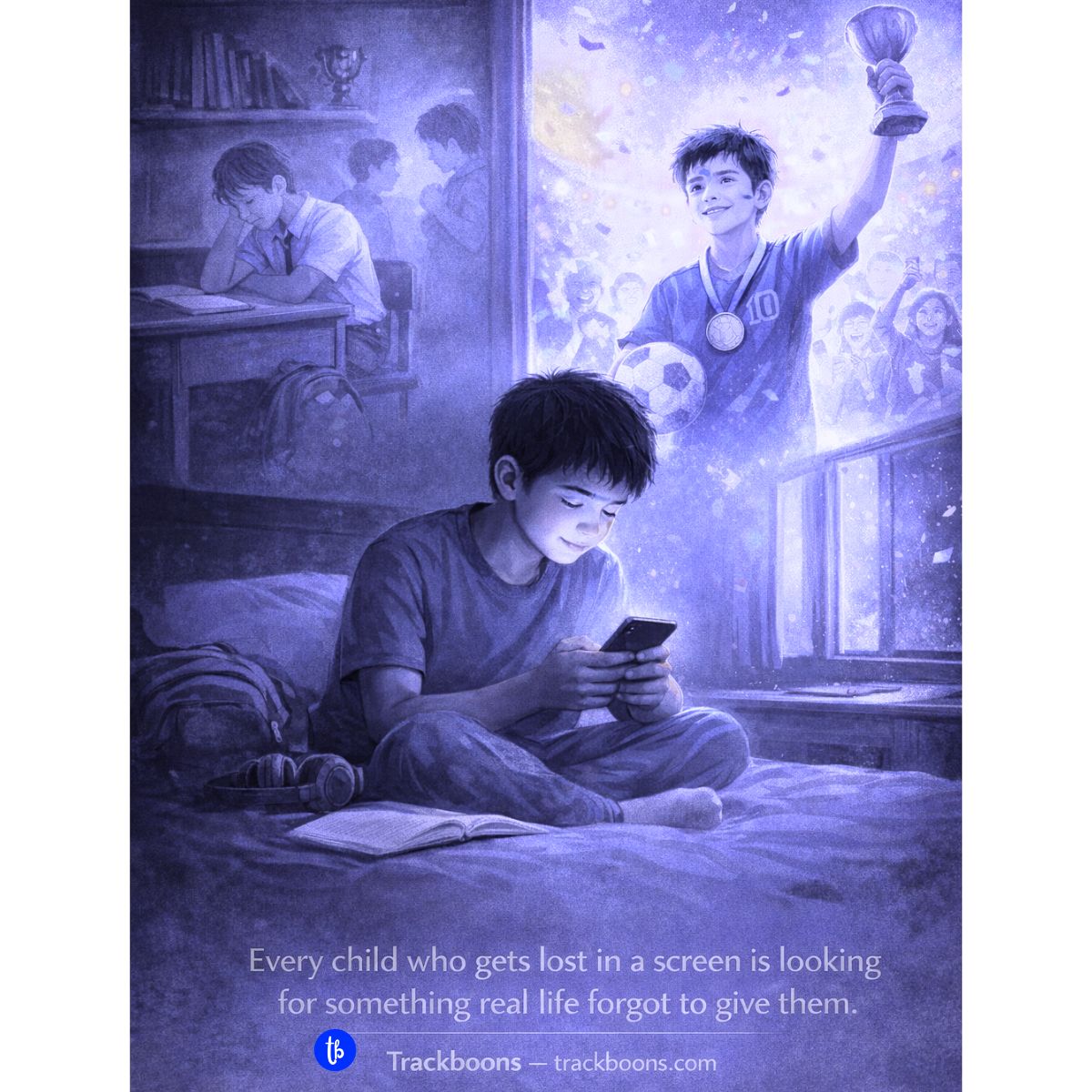
A mother walked into my clinic looking deeply worried. She said her 12 year old son had been telling the family stories for months. That he was the best football player in school. That his teachers praised him in front of everyone. That he was going to meet the President for his achievements.The family believed him. He seemed so happy and confident.
Then they checked with the school.None of it was true.
As a psychologist with 25 years of experience working with children, students and families, I have seen many cases of screen dependency. But this one stayed with me. Because it was not just about too much phone time. It was about a child who had found an entire identity inside a mobile game ,one that real life had failed to give him.
The Real Story Behind the Screen
When I sat with the boy the real picture slowly became clear.
He was 12 years old. His father was not at home. His mother was managing everything alone with limited resources. Academic pressure was building. Real life felt uncertain and unrewarding.
But inside his mobile game everything was completely different.
He was celebrated. He was winning. He was somebody special.
He was spending at least 8 hours a day inside that world.
And slowly that world became more real to him than the one outside.
The achievements in the game started feeling like his own real achievements. The praise inside the screen started filling the space where real encouragement was missing.
The stories he told his mother were not lies in the way we usually understand lies.
They were a child trying to feel enough in the only world where that feeling was available to him.
What Is Actually Happening Inside the Brain
To understand why children get pulled so deeply into screens we need to understand one word. Dopamine.
Every time we pick up our phone and scroll, play a game or receive a notification our brain releases a small burst of dopamine — the brain's reward chemical. It feels good. It feels exciting. It makes the brain want more.
This is exactly the same neurological mechanism behind any addiction.
But what makes screen addiction particularly serious in children is the state of their developing brain.
The prefrontal cortex — the part of the brain responsible for reality checking, rational thinking, impulse control and long term decision making — does not fully develop until the age of 25.
So a child spending 8 or more hours daily on a screen has a brain that cannot yet fully distinguish between what is genuinely real and what is designed to feel real.
Virtual rewards start feeling more satisfying than real life achievements. Virtual praise starts feeling more reliable than real relationships. The screen world feels safer and more controllable than the unpredictable real world.
And real life slowly starts to feel flat, boring and deeply unrewarding in comparison.
NIMHANS Recognises This as a Clinical Issue
India's premier mental health institution NIMHANS in Bangalore recognised the severity of this problem and established a dedicated SHUT Clinic Service for Healthy Use of Technology.
It is one of the first of its kind in India specifically addressing internet and gaming addiction as a genuine clinical condition requiring professional intervention.
This is not a parenting problem. This is not a child being difficult or manipulative. This is a growing public mental health issue that is affecting children across every socioeconomic background in India today.
Warning Signs Every Parent Should Know
As a psychologist I want to share some signs that go beyond normal screen use and indicate that a child may need professional support:
Feeling intensely restless, irritable or anxious when the phone or device is taken away.
Losing interest in outdoor activities, sports, friendships or hobbies they once genuinely enjoyed.
Significant difficulty sleeping or sleeping at very irregular hours.
Struggling to hold a real face to face conversation without reaching for the phone.
Confusing screen achievements or social media validation with real life identity and self worth.
Making up stories or exaggerating real life achievements to match the status they feel inside the game world.
Withdrawal from family interactions and increasing emotional distance from people at home.
If you are noticing three or more of these signs consistently in your child please consider reaching out to a mental health professional. Early intervention makes an enormous difference in outcomes.
What Actually Helps — And What Does Not
The most common instinct is to simply take the phone away.
In most cases this makes things significantly worse.
When the phone is suddenly removed the brain loses its primary source of dopamine with no replacement available. This creates intense withdrawal like symptoms - anxiety, anger, restlessness and emotional shutdown. The child does not learn to live without the screen. They simply wait desperately to get it back.
The real solution is gradual and compassionate replacement.
This means slowly introducing activities that give the brain genuine real world dopamine. Physical movement and sport. Creative hobbies like art, music or cooking. Face to face friendships and social connection. Real achievements in skills that build genuine confidence.
And most importantly feeling genuinely seen, heard and valued in real life. Children do not get lost in screens because they are lazy, weak or addicted.
Most of the time they get lost because something in real life is not meeting a deep and fundamental human need.
Belonging. Recognition. Safety. Worth.
When we address that underlying need with patience and warmth the screen gradually loses its power.
A Note for Parents
If your child is spending excessive time on screens please approach this with curiosity rather than anger.
Ask not what is wrong with them.
Ask what they are finding in that screen world that they are not finding in real life.
That one question will tell you far more than any amount of restriction ever will.
The boy in this story is doing much better today. It took time, consistent support and a lot of work with both him and his family.
But the first step was simply someone taking his experience seriously and looking beneath the behaviour with genuine compassion.
Not a bad child. Not a careless mother. Just a lonely child who found a world where he could finally feel like enough.
Conclusion
Mobile and gaming addiction in children is one of the fastest growing mental health challenges in India today. As parents, educators and mental health professionals our response needs to go beyond rules and restrictions.
It needs to go to the root.
Every child who gets lost in a screen is looking for something real life forgot to give them.
Our job is to find out what that something is and give it to them in the real world.
Leave a Comment
Comment Section
Related Blogs